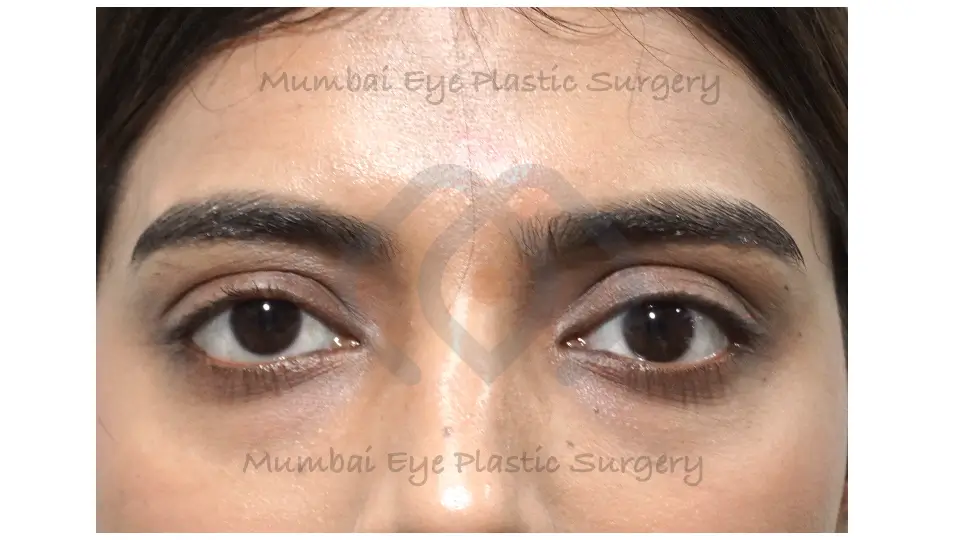
Thyroid Eye Disease (TED) is a complex autoimmune condition that can profoundly impact both your vision and your physical appearance. For many individuals living with this condition, the physical changes—such as bulging eyes, swollen lids, or a constant “staring” look—can be as emotionally distressing as the physical discomfort itself.
Yet, despite its life-altering impact, TED remains a significantly neglected disease. Because its early symptoms mimic common issues like allergies or dry eyes, patients often face long delays before receiving an accurate diagnosis. Furthermore, because treating it requires a highly niche surgical practice, many patients are left unaware that their changing facial appearance can actually be restored.
Fortunately, world-class specialized care is available right here in Mumbai. At Mumbai Eye Plastic Surgery (MEPS), our dedicated, USA-trained oculoplastic surgeons bridge the gap between delicate eye care and advanced reconstructive plastic surgery to help you regain comfort, function, and confidence.
A Frequently Neglected Disease: The Journey to Diagnosis
Thyroid Eye Disease is often misunderstood and overlooked in its early stages. Many patients cycle through general physicians, endocrinologists, and general ophthalmologists without receiving a clear plan for their changing eyes.
This neglect happens for two main reasons:
The “Silent” Phase: Early signs like redness, grittiness, and puffiness are frequently misdiagnosed as standard dry eye syndrome, conjunctivitis, or chronic allergies.
The Clinical Gap: While endocrinologists manage the underlying thyroid blood levels, they are not trained to treat the structural changes happening behind the eye socket. Conversely, general eye doctors may not possess the specialized training required to handle complex orbital issues.
This leaves patients feeling isolated, watching their eyes bulge or change shape without knowing where to turn for help.
What is Thyroid Eye Disease?
Thyroid Eye Disease (also known as Graves’ Ophthalmopathy) occurs when the body’s immune system mistakenly attacks the muscles and fatty tissues around the eyes. This causes severe inflammation, swelling, and tissue buildup inside the narrow confines of the bony eye socket. While it is most commonly linked to hyperthyroidism, TED can happen even if your thyroid hormone levels are normal or low.
Common Symptoms of TED:
- Proptosis: A prominent bulging or protrusion of one or both eyes.
- Eyelid Retraction: Upward pulling of the top lid, creating a persistent “surprised” or staring look.
- Severe Dryness: Gritty feelings, redness, and chronic irritation from incomplete eyelid closure.
- Double Vision: Misalignment caused by stiff, inflamed eye muscles.
- Pain & Pressure: A deep ache behind the eyes, especially during eye movement.
The Two Phases of TED: Active vs. Stable
Understanding the timeline of TED is crucial for planning your medical journey:
1. The Active Phase: This is the initial inflammatory period that can last from several months to two years. Treatment focuses on symptom relief using lubricating drops, lifestyle adjustments, and medical therapies like steroids to curb inflammation.
2. The Stable Phase: Once inflammation subsides, the active phase ends. However, structural changes—like permanent bulging, double vision, or retracted eyelids—often remain. This is where definitive oculoplastic surgery plays a life-changing role.
Global Standards of Care: Why USA Training Matters
At Mumbai Eye Plastic Surgery, our primary surgeons bring the highest tier of international clinical standards directly to our patients in India.
Dr. Adit Gupta completed prestigious, double-fellowship training at UCLA, Los Angeles, and Beverly Hills, USA, specialising in advanced cosmetic and reconstructive eyelid procedures.
Dr. Prerana Tahiliani honed her surgical skills at UCLA and the Children’s Hospital, Los Angeles, USA, alongside top-tier global institutions.
This rigorous American training ensures our clinic utilizes the most advanced, minimally invasive surgical protocols used in top medical centers globally, bringing world-class expertise to a heavily underserved patient population in India.
How Oculoplastic Surgery Restores Your Eyes
Depending on how TED has impacted your facial structure, surgical rehabilitation typically follows a precise, staged approach:
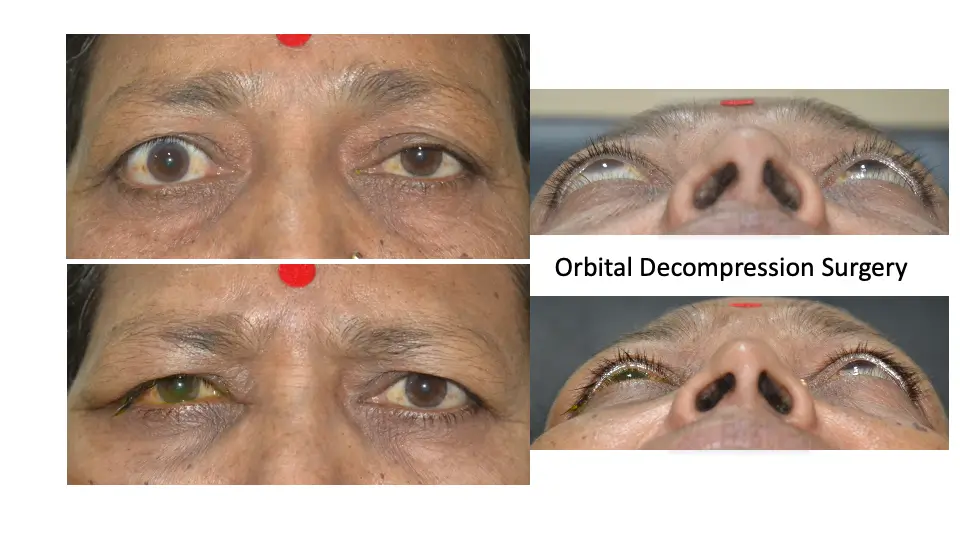
1. Orbital Decompression Surgery
When swelling pushes the eyes forward, it causes a prominent bulge and can stretch the optic nerve. [Orbital decompression](https://mumbaieyeplasticsurgery.in/) creates more space inside the eye socket by carefully removing a small amount of bone, excess fat, or both. This allows the eye to safely settle back into a more natural position, relieving pressure and protecting your eyesight.
2. Strabismus (Eye Muscle) Surgery
If chronic inflammation scars or tightens your eye muscles, it pulls your eyes out of alignment, leading to double vision. Repositioning these affected muscles improves eye alignment, helping restore singular, clear vision and expanding your range of motion.
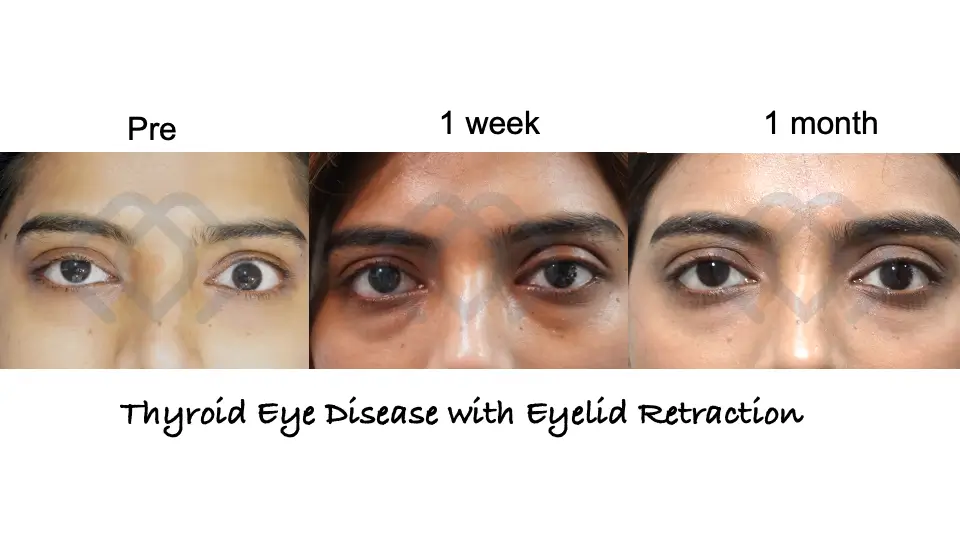
3. Eyelid Retraction Repair & Blepharoplasty
Tight, retracted eyelids prevent you from blinking properly, leaving the cornea exposed and vulnerable. Our surgeons adjust the eyelid muscles to help the lids rest naturally and close completely. Cosmetic contouring (blepharoplasty) can also remove residual puffiness or “bags” to fully restore your original appearance.
Why Choose Mumbai Eye Plastic Surgery (MEPS)?
At MEPS, we prioritize a highly customized, safe approach to TED management. We collaborate closely with your endocrinologist to ensure your underlying thyroid levels are stable before proceeding with definitive rehabilitative surgeries. By combining USA-trained surgical precision with a compassionate boutique clinic environment in Pali Hill, Bandra, we deliver natural-looking, functionally perfect results.
Take the First Step Toward Relief
You do not have to live with the discomfort or self-consciousness of a neglected disease. Contact Mumbai Eye Plastic Surgery today to schedule a comprehensive evaluation with our internationally-trained oculoplastic specialists and map out your personalized path to recovery.
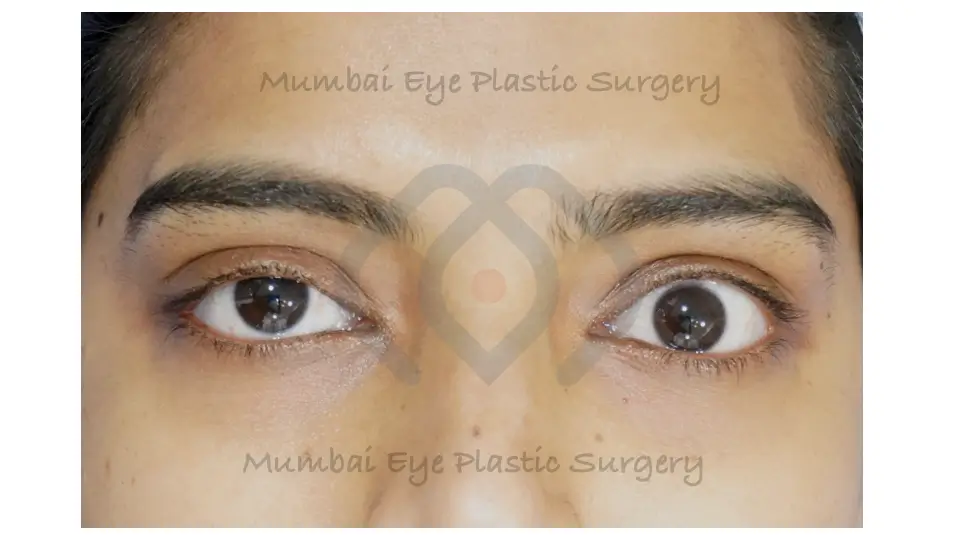
Before