
If you have noticed yellowish patches or small raised deposits around your eyelids, you may have xanthelasma. It is generally harmless and does not usually affect vision, but because it appears around the eyes, it can become a noticeable cosmetic concern.
If you are considering xanthelasma treatment in Mumbai, understanding the condition and available treatment options can help you make an informed decision.
What Is Xanthelasma?
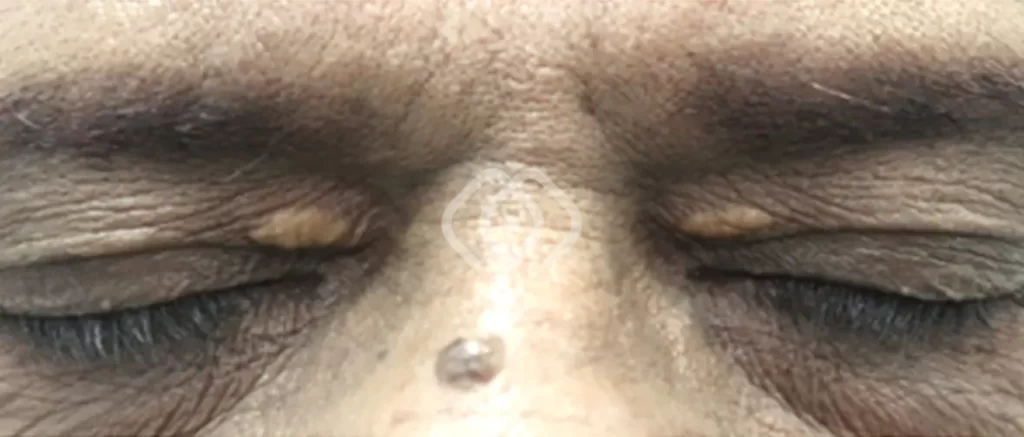
Xanthelasma, also called xanthelasma palpebrarum, is a yellowish deposit that develops beneath the skin around the eyelids. It is caused by the accumulation of lipid-rich material within the skin.
It commonly appears near the inner corners of the upper or lower eyelids. It may initially look like a small, flat yellow patch and can gradually become more prominent.
Xanthelasma is usually painless and does not interfere with eyesight. Many patients seek treatment primarily because of its appearance.
Is Xanthelasma Related to High Cholesterol?
Xanthelasma can sometimes be associated with high cholesterol or other lipid abnormalities. It may also occur alongside conditions such as diabetes or thyroid disorders.
However, having xanthelasma does not necessarily mean that your cholesterol is high. Some people develop it despite having normal cholesterol levels.
Depending on your medical history, your doctor may recommend appropriate blood tests or health checks.
Does Xanthelasma Go Away on Its Own?
Usually, no.
Managing high cholesterol and maintaining a healthy lifestyle are important for your overall health, but they generally do not remove an existing xanthelasma.
If the appearance bothers you, a specialist can assess the lesion and discuss suitable treatment options.
What Are the Treatment Options for Xanthelasma?
There is no single treatment that works best for every patient. The choice depends on the size, depth and location of the xanthelasma.
Surgical Removal
Surgical excision involves carefully removing the affected tissue from the eyelid. It may be suitable for larger or deeper deposits.
Since the eyelid is delicate and highly visible, careful technique is important to minimise scarring and preserve the natural appearance and function of the eyelid.
Laser Treatment
Laser treatment may be considered for selected superficial xanthelasma lesions. It allows the affected tissue to be treated precisely and may be an alternative to conventional surgery in appropriate cases.
Temporary redness, swelling or pigmentation changes may occur during healing.
Chemical Treatment
Chemical treatments such as trichloroacetic acid (TCA) have been used for selected superficial lesions.
Because the skin around the eyes is extremely delicate, this type of treatment should only be performed by a qualified medical professional. Home remedies or applying acids yourself can cause burns, scarring and pigmentation problems.
Electrosurgical or Radiofrequency Treatment
Electrosurgical and radiofrequency techniques may also be considered in selected cases. These use controlled energy to treat the affected tissue.
The appropriate approach depends on the individual lesion and the patient’s skin and medical history.
Which Xanthelasma Treatment Is Best?
The best treatment depends on the individual case.
During an assessment, a specialist may consider:
- Size and thickness of the lesion
- Location on the eyelid
- Number of deposits
- Skin type
- Previous treatment
- Risk of scarring or pigmentation
- Desired cosmetic outcome
The goal is not simply to remove the yellow deposit. Treatment should also preserve the natural appearance and function of the eyelid.
Can Xanthelasma Come Back?
Yes. Xanthelasma can recur after treatment.
Removing an existing deposit does not guarantee that new deposits will not develop. If high cholesterol or another associated condition is present, managing it appropriately may help reduce the risk of further deposits.
Your specialist can discuss the possibility of recurrence before treatment.
What Should You Expect During Treatment?
The experience and recovery period depend on the treatment selected.
Your specialist will first examine the lesion and recommend an appropriate approach. Depending on the procedure, local anaesthesia or another form of numbing may be used.
Some redness, swelling or sensitivity may occur afterwards. Recovery varies according to the size of the lesion and treatment method.
Following your doctor’s aftercare instructions is particularly important because the treatment area is close to the eyes.
Xanthelasma Treatment in Mumbai
The eyelid is a delicate structure that plays an important role in protecting the eye while also contributing significantly to facial appearance. This makes precision especially important when treating xanthelasma.
If you are looking for xanthelasma treatment in Mumbai, a specialist evaluation can help determine whether surgical removal, laser treatment or another technique is appropriate for your condition.
At MEPS, specialist assessment can help patients understand their treatment options and choose an approach based on the characteristics of their xanthelasma.
Conclusion
Xanthelasma is usually harmless, but visible deposits around the eyes can be a significant cosmetic concern. Several treatment options are available, including surgical removal, laser treatment, chemical treatment and electrosurgical techniques.
If you are considering xanthelasma treatment in Mumbai, the first step is a specialist evaluation. This allows the treatment to be selected according to the size, depth and location of the lesion while keeping the appearance and function of the eyelid in mind.
If you have noticed yellowish deposits around your eyelids, consult a specialist to understand whether treatment is appropriate for you.